
Table of Contents
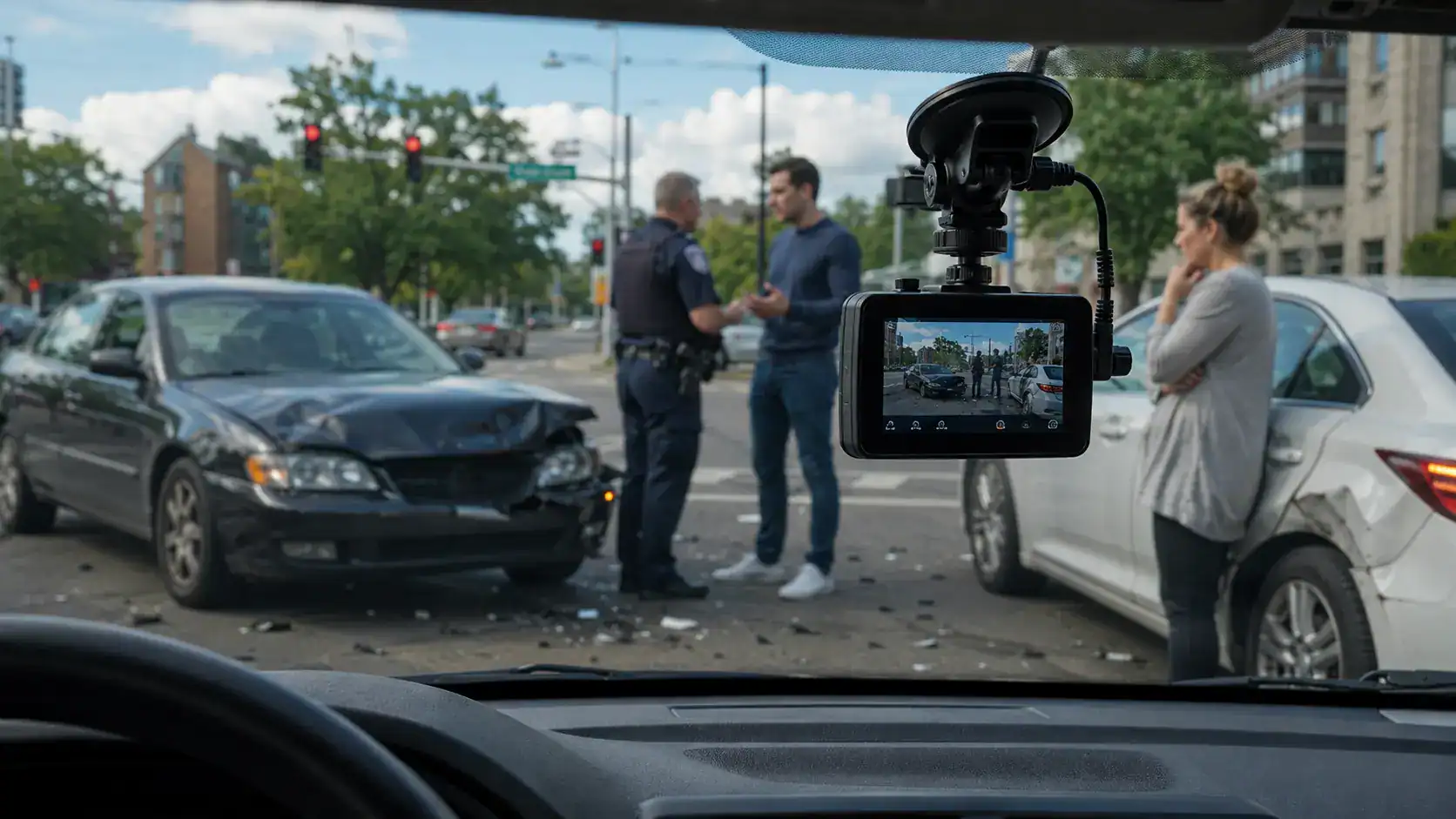
If another driver is blaming you after a crash, dashcam footage can quickly become one of the strongest pieces of evidence in your Illinois car accident claim. A clear video may show who had the green light, whether a driver drifted across lanes, how fast traffic was moving, whether brake lights came on, or whether someone was distracted in the seconds before impact.
That matters because disputed fault can delay or reduce a settlement. Insurance adjusters may question your story, rely on their own driver’s version, or argue that both drivers share blame. Dashcam footage can help move the claim away from a he-said-she-said argument and toward objective proof.
This guide explains how dashcam footage can help an Illinois car accident claim, when video can hurt your case, how to preserve the file correctly, and why you should have an attorney review the footage before sending it to an insurance company.
Key Takeaways
Dashcam footage can help an Illinois car accident claim by showing what happened before, during, and after a crash. It may prove fault, challenge a false story, support a police report, identify a hit-and-run driver, or reduce unfair blame under Illinois’ modified comparative negligence rule. The footage must be authentic, preserved, and presented carefully. Before giving video to an insurance adjuster, injured drivers should have it reviewed because dashcam evidence can also expose speeding, distraction, following too closely, or other facts that hurt the claim.
Why Dashcam Footage Can Be So Valuable After an Illinois Crash
Crash claims often turn on details that happen in seconds. A witness may miss the beginning of the collision. A driver may change their story after speaking with their insurer. A police officer may arrive after the vehicles have already moved. Dashcam footage can preserve the scene as it actually unfolded.
Video evidence may show lane position, traffic signals, road conditions, brake lights, turn signals, following distance, impact direction, and the immediate reaction of both drivers. These details can help an adjuster, attorney, accident reconstruction expert, or jury understand the crash more clearly.
Video Can Reduce Disputed-Fault Arguments
When the other driver says one thing and you say another, insurers often treat fault as disputed. That can lead to delays, low offers, or a denial. Dashcam footage can reduce the room for argument by showing what happened instead of relying only on memory.
Video Can Support or Correct the Police Report
Police reports are important, but they are not always complete. Officers usually did not see the crash happen. If a report says fault could not be determined, dashcam footage may fill in the missing details. If the report contains an error, the footage may help explain why the record should be corrected or supplemented.
Video Can Show Facts That People Miss
A dashcam may capture a driver looking down, drifting over the line, running a light, making an unsafe turn, stopping suddenly, or leaving the scene. It may also show weather, lighting, traffic density, and road hazards that explain why the crash occurred.
Important Numbers: Why Objective Evidence Matters
Car accident claims often involve distracted driving, speed, traffic signals, and lane changes. NHTSA reported that distracted driving claimed 3,208 lives in 2024 and injured 315,167 people. NHTSA also explains that reading or sending a text for 5 seconds at 55 mph is like driving the length of a football field with your eyes closed. A dashcam can help show whether distraction, unsafe movement, or failure to react played a role in a specific crash.
What Illinois Law Says About Dashcam Footage
Dashcam footage is generally usable in an Illinois injury claim when it is relevant, authentic, and preserved. In practical terms, that means the video should show the crash or facts connected to the crash, and the person offering it should be able to explain where it came from, when it was recorded, and that it was not altered.
The legal issue is usually not whether video can ever be used. The bigger issue is whether the file is complete, reliable, and properly introduced. That is why saving the original file matters. Editing, trimming, compressing, or posting the video online can create unnecessary challenges.
Dashcam Video Is Different From Dashcam Audio
Video of a public roadway is usually less legally sensitive than audio of private conversations inside a vehicle. Illinois has strict eavesdropping rules for private conversations, so dashcam audio should be treated carefully. If your camera records sound, do not delete or edit the file yourself, but have an attorney review it before sharing it with an insurer.
The Camera Should Not Block Your View
The dashcam should be mounted safely so it does not obstruct the driver’s view. A camera that blocks visibility can create arguments about unsafe driving or distraction. A small windshield-mounted camera placed behind or near the rearview mirror is usually easier to defend than a large device placed in the center of the windshield.
How Dashcam Footage Can Help When the Other Driver Lies
Dashcam footage is especially useful when the other driver changes their story. For example, a driver may admit at the scene that they ran a red light, then later tell the adjuster that you entered the intersection too soon. A video showing the signal, the vehicles, and the timing can shut down that kind of dispute.
It can also help when the other driver claims you were speeding, failed to signal, changed lanes suddenly, followed too closely, or caused a rear-end collision. Even if the footage does not show every angle, it may show enough context to make the false story less believable.
Example: Red-Light Dispute
A driver says both vehicles entered on yellow and that fault is unclear. Your dashcam shows your light was green for several seconds before the other vehicle entered the intersection. That video can become the central evidence in the liability argument.
Example: Unsafe Lane Change
The other driver says you drifted into their lane. Your dashcam shows your vehicle staying within the lane while the other car crosses the line without signaling. That footage can support your statement and reduce the insurer’s attempt to shift blame.
Example: Hit-and-Run or Uninsured Driver
If the at-fault driver leaves the scene, footage may capture the vehicle, license plate, make, model, direction of travel, or the moment of impact. This can help police, support an uninsured motorist claim, and show your own insurer that the crash happened as reported.
Can Dashcam Footage Help If You Were Partly at Fault?
Yes. Dashcam footage can still help even if you share some responsibility for the crash. Illinois follows modified comparative negligence. If you are more than 50% at fault, you are barred from recovery. If you are 50% or less at fault, your damages may be reduced by your percentage of fault.
This makes video evidence important. A few seconds of footage can affect whether an adjuster tries to assign you 10%, 30%, or more than 50% fault. If the video shows the other driver was primarily responsible, it can protect your ability to recover compensation even when the insurer tries to exaggerate your role.
Why Fault Percentage Matters
If your total damages are $100,000 and you are found 20% at fault, your recovery may be reduced to $80,000. If the insurer can push your fault above 50%, your claim may fail. Dashcam footage can help keep the fault discussion tied to evidence rather than assumptions.
How Dashcam Footage Can Hurt Your Illinois Car Accident Claim
Dashcam footage is powerful because it is objective, but that also means it can hurt you if it captures unfavorable facts. If the video shows you speeding, following too closely, looking away from traffic, rolling through a stop sign, or reacting late, the insurer may use it to reduce or deny your claim.
This does not mean you should destroy or hide evidence. It means you should not rush to send footage to the other driver’s insurance company before a lawyer reviews it. The context matters. A short clip can be misleading if it does not show what happened before the recorded segment or if audio is taken out of context.
Audio Can Create Extra Problems
Dashcam audio may capture statements like ‘I did not see them’ or ‘I was rushing,’ even when those words do not fairly describe fault. Adjusters may try to frame casual comments as admissions. An attorney can help decide how to handle the full file and explain the context.
Low-Speed Footage Does Not End an Injury Claim
Insurance companies sometimes argue that a low-speed impact cannot cause real injury. That is not always true. The medical evidence still matters. A dashcam can show crash mechanics, but doctors, imaging, treatment records, and symptoms help prove injury and damages.
How to Preserve Dashcam Footage After a Crash
Preservation is one of the most important steps after an accident. Many dashcams use loop recording, which means older footage is overwritten automatically. Depending on the memory card size and settings, the crash video could disappear within hours or days if it is not locked or saved.
- Press the lock or emergency-save button on the dashcam as soon as it is safe.
- Turn off loop recording or remove the memory card once the vehicle is secure.
- Copy the original file to a computer, cloud folder, and backup drive.
- Keep the original memory card and do not edit, trim, rename, or compress the video.
- Write down the date, time, location, police report number, and which camera angle the file shows.
- Do not post the footage on social media or send it casually to friends, witnesses, or insurers.
Preservation Letters Can Protect Other Videos
Your dashcam is not the only possible video source. Nearby businesses, traffic cameras, rideshare vehicles, delivery trucks, buses, or the other driver’s vehicle may have footage. An attorney can send preservation letters quickly so those videos are not deleted before they can be reviewed.
What Features Make Dashcam Footage More Useful?
Not every dashcam produces the same quality evidence. The more clearly the footage shows timing, location, and vehicle movement, the more useful it may be in a claim.
- Clear resolution: A 1080p or better recording may capture traffic lights, road signs, and vehicle movement more clearly.
- Wide field of view: A wider angle can capture nearby lanes, side approaches, pedestrians, and roadway context.
- Date and time stamp: Time-stamped footage is easier to connect to the police report and medical timeline.
- GPS data: Speed and route information can help answer claims that you were speeding or somewhere else.
- Front and rear cameras: Rear footage can show tailgating, rear-end impacts, and unsafe lane changes from behind.
- Impact detection: A G-sensor can automatically save crash footage before it is overwritten.
How Insurance Adjusters Review Dashcam Footage
An adjuster will not only look for proof that the other driver caused the crash. They will also look for anything that reduces the value of your claim. That may include your speed, reaction time, lane position, distance from the other vehicle, road conditions, and statements made after the crash.
A strong video can make liability harder to dispute. But the video should be presented as part of a complete claim package, not alone. Medical records, repair estimates, police reports, witness statements, wage loss proof, and photos still matter.
Do Not Send the Video Too Early
The other driver’s insurer may ask for the dashcam file immediately. You are generally not required to provide evidence to the opposing insurer before you understand what it shows and how it may affect your claim. Have a lawyer review it first.
Use the Video With the Full Evidence Package
The best use of dashcam footage is usually strategic. It can be paired with the police report, vehicle damage photos, medical documentation, witness statements, and a written demand that explains why the other driver is responsible.
Can Dashcam Footage Help With an Uninsured Motorist Claim?
Yes. If the at-fault driver has no insurance, leaves the scene, or cannot be identified, dashcam footage may help support an uninsured motorist claim through your own insurance policy. Your insurer will still investigate fault, causation, and damages, so objective video can matter.
In a hit-and-run case, the video may prove that another vehicle caused the crash. It may also capture the license plate, direction of travel, color, make, model, or identifying features of the fleeing vehicle. That can support both the police investigation and the insurance claim.
Can the Other Driver’s Dashcam Help Your Claim?
Yes. Sometimes the best video is not from your vehicle. The other driver’s camera, a commercial truck camera, a rideshare camera, or a nearby business camera may show the crash from a better angle. If the other side has video, your lawyer can request it and, if needed, use discovery tools in litigation to obtain it.
If the other driver’s insurer refuses to share video, that may be a sign the footage is important. A preservation demand can help prevent deletion while the claim is investigated.
How Much Can Dashcam Footage Affect Settlement Value?
There is no fixed dollar amount for dashcam footage. Its value depends on what it proves. A video that clearly shows the other driver running a red light may significantly improve the liability position. A video that only shows the aftermath may still help, but it may not change the claim value as much.
Dashcam footage can affect settlement value in three practical ways. First, it can reduce disputed-fault arguments. Second, it can make the insurer more concerned about losing in court. Third, it can shorten the negotiation process because there is less room to argue about how the crash happened.
What to Do Before Sharing Dashcam Footage With Anyone
- Save the original file and at least two backups.
- Do not edit, crop, enhance, or compress the footage yourself.
- Write down what the video shows while your memory is fresh.
- Get medical care and document your injuries, even if the crash is clearly recorded.
- Do not post the video publicly.
- Ask an Illinois car accident lawyer to review the footage before the insurance company receives it.
Talk to an Illinois Car Accident Lawyer Before Sending Dashcam Footage
If you have dashcam footage after an Illinois car accident, do not let the insurance company control the story before you understand what the video helps prove. Contact The Law Offices of John S. Eliasik for a free consultation and help reviewing your footage, preserving evidence, and protecting your injury claim before you speak with the adjuster.
How Dashcam Footage Helps Prove Distracted Driving
Dashcam footage may be especially helpful when distraction is suspected. NHTSA reports that distracted driving killed 3,208 people and injured 315,167 people in 2024, and its distracted driving statistics explain why a few seconds of inattention can change a crash case. If video shows a driver looking down, drifting, failing to brake, or reacting late, it may support the argument that distraction contributed to the collision.
FAQs
Can dashcam footage help your Illinois car accident claim?
Yes. Dashcam footage can help prove how the crash happened, who had the right of way, whether the other driver was distracted, and whether the insurer’s version of fault is accurate.
Is dashcam footage admissible in an Illinois car accident case?
Dashcam footage may be admissible if it is relevant, authentic, and unaltered. Your attorney may need to show when, where, and how the video was recorded.
Should I send dashcam footage to the insurance company?
Not before a lawyer reviews it. The video may help your claim, but it may also contain details the insurer can use against you. Get legal advice before sending the file.
What if my dashcam video shows I was partly at fault?
The footage may still help by showing the accurate fault breakdown. In Illinois, you may recover damages if you are not more than 50% at fault, but your recovery can be reduced by your share of fault.
Can dashcam footage help if the other driver lies?
Yes. Video can contradict false claims about speed, lane changes, red lights, stop signs, turn signals, or how the crash happened. It can turn a disputed claim into a stronger evidence-based claim.
What if the dashcam did not record the exact impact?
Footage before or after the crash may still help. It can show traffic conditions, vehicle position, road layout, driver behavior, the other driver’s statements, or the immediate aftermath.
Can dashcam audio hurt my claim?
It can. Audio may capture comments that insurers try to frame as admissions. Illinois also has strict rules for private audio recordings, so have an attorney review audio before sharing it.
How do I preserve dashcam footage after a crash?
Lock the file, stop loop recording, copy the original to safe storage, keep the memory card, and avoid editing or posting the video. Preserve the full original file.
Can the other driver’s dashcam footage help me?
Yes. The other driver’s camera or a commercial vehicle camera may show the crash from a useful angle. A lawyer can request or subpoena footage when needed.
Do I still need medical records if I have dashcam footage?
Yes. Dashcam footage can prove how the crash happened, but medical records prove your injuries, treatment, pain, limitations, and damages.
Disclaimer: This article is provided by Eliasik Law for general informational purposes only and does not constitute legal advice. Reading this content does not create an attorney-client relationship. Laws, fees, regulations, and court decisions referenced may change. For advice on your specific situation, please contact Eliasik Law directly to schedule a consultation.