
Table of Contents
You or someone you care about got hurt at a pool. Maybe a kid went under and nobody saw. Maybe a diving board broke, or the drain pulled someone down, or the gate that was supposed to lock didn’t. Now you’re dealing with hospital bills, trauma, time off work, and a lot of questions about what happens next.
Who is liable for a swimming pool or near-drowning injury in Illinois? The answer depends on where the accident happened, who owned or controlled the pool, what safety measures were in place, and what went wrong. Illinois law recognizes that pools are inherently dangerous, especially to children. Property owners, managers, and even product manufacturers can be held responsible when someone gets hurt. Understanding who is liable for a swimming pool or near-drowning injury in Illinois starts with examining the specific circumstances of your case.
This post walks through the different parties who might be liable, the legal standards Illinois courts apply, what you need to prove, and the steps you should take if you or a loved one was injured in a pool accident. We’ll cover homeowner liability, public and commercial pool operators, product defects, and the special rules that apply when children are involved.
Who Owns or Controls the Pool Where the Accident Happened?
Liability starts with control. The person or entity that owns, operates, or manages the pool typically owes a duty of care to anyone using it. That duty changes depending on the relationship between the injured person and the property owner.
In Illinois, visitors fall into three categories: invitees, licensees, and trespassers. An invitee is someone invited onto the property for the owner’s benefit (a customer at a hotel pool, a member at a gym). A licensee is a social guest (a neighbor invited over for a swim). A trespasser enters without permission. The duty owed to each is different, with invitees receiving the highest level of care. When determining who is liable for a swimming pool or near-drowning injury in Illinois, this classification becomes essential to establishing the duty of care.
For swimming pools, the distinction matters. A homeowner who invites the neighborhood kids over for a pool party owes those kids a higher duty than they owe to a stranger who climbs the fence at midnight. Commercial operators owe invitees a duty to keep the premises reasonably safe and to warn of hidden dangers they know about or should know about.
Control also includes maintenance. If a property management company is responsible for upkeep, or a condo association hires a pool service, those entities can share liability when negligence in maintenance leads to injury. Understanding who is liable for a swimming pool or near-drowning injury in Illinois requires examining all parties with control over the property.
Homeowner Liability for Swimming Pool Injuries in Illinois
Residential pool owners in Illinois have specific legal duties. If you own a pool, you’re expected to take reasonable precautions to prevent injuries, especially to children. That includes proper fencing, working gates and locks, clear depth markers, and maintaining equipment in safe condition.
Illinois premises liability law says homeowners must warn guests of known hazards and keep the property reasonably safe. If a diving board is cracked, the ladder is loose, or the pool chemicals are stored where kids can reach them, the homeowner can be liable if someone gets hurt as a result. In fact, a substantial majority of residential pool drownings occur at the home of family or friends, highlighting the importance of understanding who is liable for a swimming pool or near-drowning injury in Illinois.
One common issue we see at Eliasik Law is the “attractive nuisance” doctrine, which applies when young children are injured. Pools are considered attractive nuisances because kids are drawn to them and can’t fully appreciate the danger. Even if a child trespasses, the homeowner may still be liable if the pool wasn’t properly secured.
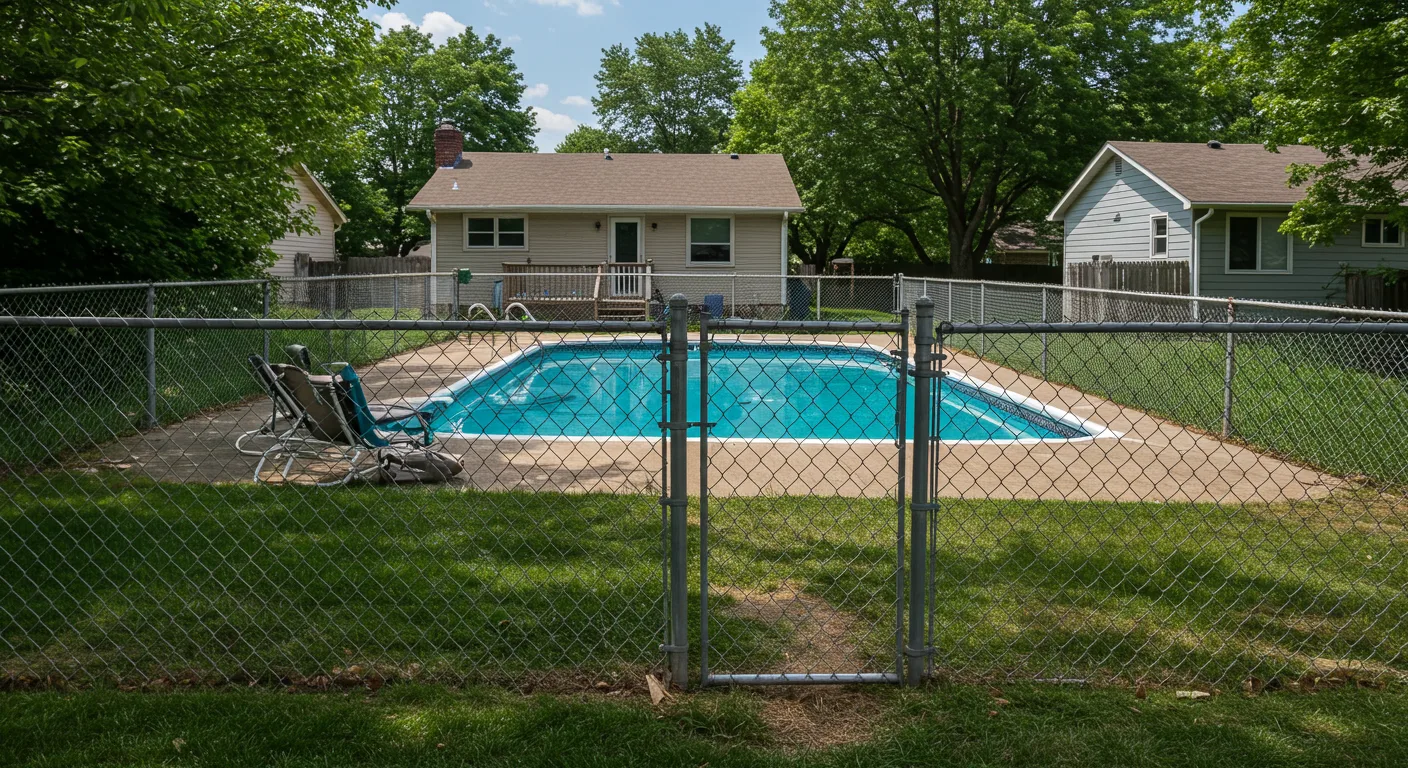
Illinois law requires pool owners to maintain barriers that prevent unsupervised access by young children. A four-foot fence with a self-closing, self-latching gate is the baseline in most municipalities. If that gate is broken or left propped open and a child drowns, the homeowner’s failure to secure the pool can form the basis of a wrongful death or personal injury claim. As of 2026, these fencing requirements remain strictly enforced across Illinois municipalities, and knowing who is liable for a swimming pool or near-drowning injury in Illinois often begins with evaluating compliance with these standards.
Homeowners insurance typically covers pool accidents, but insurers fight these claims hard. They’ll argue the injured person was trespassing, that the danger was obvious, or that the homeowner met all code requirements. That’s why documentation and legal representation matter early.
Who Is Liable for a Swimming Pool or Near-Drowning Injury in Illinois at Public or Commercial Pools?
Hotels, apartment complexes, health clubs, water parks, and municipal pools operate under a higher standard. These are businesses or government entities that invite the public (or residents, or members) to use the pool. They owe invitees a duty to inspect, maintain, and warn.
Commercial pool operators must follow state and local health and safety codes. In Illinois, public pools are regulated by the Illinois Department of Public Health. Violations of these codes, inadequate lifeguards, broken drain covers, missing safety equipment, poor water chemistry, can be evidence of negligence in a liability case. Understanding who is liable for a swimming pool or near-drowning injury in Illinois at commercial facilities requires examining compliance with these regulatory standards.
Municipalities and park districts run many public pools. Suing a government entity in Illinois requires compliance with the Illinois Local Governmental and Governmental Employees Tort Immunity Act. You must file a notice of claim within a short window (often one year or less), and certain immunities apply. But immunity isn’t absolute. If the pool was poorly maintained or the lifeguard was undertrained, liability can still attach, and determining who is liable for a swimming pool or near-drowning injury in Illinois in these cases demands knowledge of governmental liability law.
Hotels and gyms are private businesses. When someone is injured at their pool, the question of who is liable for a swimming pool or near-drowning injury in Illinois becomes whether the business knew or should have known about the hazard and failed to fix it or warn about it. Slip-and-fall injuries on wet pool decks, diving accidents in pools marked “No Diving,” and entrapment injuries from faulty drains all fall under premises liability.
In our experience, these defendants have teams of lawyers and adjusters whose job is to minimize payouts. They’ll pull surveillance video, interview witnesses, and look for any reason to shift blame to the injured person. Early investigation and preservation of evidence are critical.
Product Defects and Equipment Failures
Sometimes the pool itself isn’t the problem. The injury results from a defective product: a broken diving board, a faulty drain cover, a malfunctioning pool lift, or a defective ladder. When evaluating who is liable for a swimming pool or near-drowning injury in Illinois, product manufacturers and distributors may be responsible parties.
When a product defect causes a swimming pool or near-drowning injury in Illinois, the manufacturer, distributor, and retailer can all be held liable under product liability law. Illinois recognizes strict liability for defective products, meaning you don’t have to prove the manufacturer was careless, only that the product was unreasonably dangerous and that defect caused your injury.
Drain entrapment is a serious hazard. The Virginia Graeme Baker Pool and Spa Safety Act is a federal law requiring anti-entrapment drain covers on public pools. When these covers are missing, broken, or improperly installed, the results can be catastrophic. Children and adults have been held underwater by the suction, leading to drowning or severe internal injuries. Since 2008, numerous states have enacted additional pool safety legislation to prevent such incidents.
Pool chemical injuries also fall into this category. If a chemical container is mislabeled, or a chlorine feeder malfunctions and releases toxic gas, the manufacturer or installer may be liable. We’ve handled cases where faulty equipment led to chemical burns and respiratory injuries, and establishing who is liable for a swimming pool or near-drowning injury in Illinois in these situations often involves multiple defendants.
Proving a product defect case requires expert testimony and a thorough investigation. The product must be preserved, tested, and compared against industry standards. This is technical work, and it’s one reason having a lawyer experienced in premises liability and product defects matters.
The Attractive Nuisance Doctrine and Liability for Injuries to Children
Illinois courts apply the attractive nuisance doctrine to protect young children from hazards they can’t fully understand. A swimming pool is the textbook example.
Under this doctrine, a property owner can be liable even if a child trespasses, if the owner knew or should have known that children were likely to enter the property, the condition (the pool) poses an unreasonable risk of serious injury or death, the child doesn’t appreciate the danger because of their age, and the burden of eliminating the danger is slight compared to the risk.
When asking who is liable for a swimming pool or near-drowning injury in Illinois when the victim is a child, the answer often points to the property owner who failed to install or maintain proper barriers. Courts have found homeowners liable when fences were too short, gates didn’t latch, or gaps in the fence allowed children to squeeze through. In 2026, Illinois courts continue to strictly enforce these protective standards.
The age of the child matters. A three-year-old can’t be expected to understand the risk of drowning. A teenager might be held to a different standard. But in cases involving very young children, Illinois law places the burden on the property owner to make the pool inaccessible.
Parents sometimes worry that their own actions will bar recovery, letting the child out of sight for a moment, not teaching them to swim. Illinois uses a modified comparative fault rule. If you’re found partially at fault, your recovery is reduced by your percentage of fault, but you can still recover as long as you’re less than 50 percent to blame.
We’ve seen insurance companies try to blame grieving parents in wrongful death cases involving children. It’s a cruel tactic, and it’s one more reason why you need someone on your side who knows how these cases work and won’t back down. Determining who is liable for a swimming pool or near-drowning injury in Illinois requires pushing back against these blame-shifting strategies.
What Do You Need to Prove in a Pool Injury Case?
To win a premises liability or negligence claim for a swimming pool injury in Illinois, you generally need to prove four things: the defendant owed you a duty of care, the defendant breached that duty, the breach caused your injury, and you suffered damages.
Duty depends on your status as an invitee, licensee, or trespasser, as discussed earlier. For children and attractive nuisances, the duty is higher. Breach means the property owner failed to do something a reasonable owner would have done, failed to fence the pool, failed to fix a broken drain, failed to post a lifeguard, failed to warn of a hidden hazard. Understanding who is liable for a swimming pool or near-drowning injury in Illinois means proving each of these elements with solid evidence.
Causation requires showing that the breach directly led to the injury. If the pool deck was slippery and unmarked and you fell and broke your arm, causation is clear. If you suffered a head injury diving into a shallow pool marked “No Diving,” the defendant may argue you assumed the risk or were comparatively at fault.
Damages include medical bills, lost wages, pain and suffering, permanent disability, and in wrongful death cases, funeral costs and loss of companionship. Illinois law allows recovery for both economic and non-economic damages in personal injury cases.
Evidence is everything. Photographs of the scene, witness statements, incident reports, maintenance records, code-compliance documents, and medical records all play a role. In one brain-injury case we handled, detailed documentation of the property owner’s prior knowledge of the hazard was key to securing a significant settlement.
Steps to Take After a Swimming Pool or Near-Drowning Injury
If you or a loved one is injured at a pool, what you do in the hours and days after the accident can affect your legal rights. Knowing who is liable for a swimming pool or near-drowning injury in Illinois starts with protecting your claim from day one.
First, get medical help immediately. Even if the person seems okay after a near-drowning, delayed symptoms like dry drowning or secondary drowning can be life-threatening. Follow all medical advice and keep records of every visit, treatment, and expense.
Second, report the incident. If it happened at a commercial or public pool, make sure management or the lifeguard files an incident report. Get a copy if possible. If it’s a private home, consider filing a police report, especially if a child was involved or the injury is serious.
Third, document the scene. Take photos of the pool, the fencing, the gate, the signage, the deck, the equipment, anything relevant. Note the time, weather, and who was present. Witnesses can disappear or forget details, so get their contact information while you can.
Fourth, preserve evidence. Don’t let anyone repair or alter the pool area until you’ve consulted a lawyer. If a product failed, keep the broken part. If there’s surveillance video, request that it be saved.
Fifth, talk to a lawyer before you talk to an insurance adjuster. Property owners’ insurance companies will contact you quickly, often within a day or two. They’ll offer to “help” and ask for a recorded statement. Don’t give one. Anything you say can and will be used to minimize or deny your claim.
How Insurance Companies Handle Pool Injury Claims
Homeowners insurance, commercial general liability policies, and umbrella policies typically cover swimming pool accidents. But coverage doesn’t mean cooperation.
Adjusters will investigate aggressively. They’ll look for code violations on your part, prior injuries, pre-existing conditions, any sign that you were careless or assumed the risk. They’ll pull social media, interview neighbors, and hire experts to say the pool was safe.
In workers’ comp cases, we see carriers deploy independent medical exams to undercut injured workers. In pool injury cases, insurers use similar tactics: hiring engineers to say the fence was adequate, citing municipal inspections as proof of compliance, or claiming the injured person was trespassing or intoxicated. Understanding who is liable for a swimming pool or near-drowning injury in Illinois isn’t just a legal question, it’s a fight.
The insurance company’s job is to pay as little as possible. Your job, our job, is to prove what happened, who’s responsible, and what the injury has cost you. Determining who is liable for a swimming pool or near-drowning injury in Illinois often requires countering the insurer’s tactics with strong evidence and expert testimony.
The attorney who founded Eliasik Law worked defense-side for a major insurer early in his career. That insider knowledge of how claims are evaluated, how reserves are set, and what makes a carrier decide to settle versus fight is a real advantage for our clients. We know the playbook because we’ve been on the other side of the table.
Damages You Can Recover in Illinois Pool Injury Cases
Illinois law allows injured victims to recover several types of compensation. Medical expenses are the starting point: emergency room visits, ambulance transport, hospital stays, surgery, rehabilitation, therapy, medication, and future medical care. Keep every bill, every explanation of benefits, every receipt. When establishing who is liable for a swimming pool or near-drowning injury in Illinois, damages documentation proves the full impact of the injury.
Lost income matters too. If you missed work because of the injury, you’re entitled to compensation for those wages. If the injury is permanent and affects your earning capacity, future lost wages are part of the claim. Pool injury victims often miss work ranging from several days for minor cases to extended periods for catastrophic injuries.
Pain and suffering, emotional distress, and loss of quality of life are non-economic damages. These are harder to quantify but often represent the largest part of a settlement or verdict, especially in catastrophic injury or wrongful death cases.
In wrongful death cases, the surviving family can recover funeral and burial expenses (typically ranging from several thousand to over ten thousand dollars in Illinois), loss of the deceased’s income and benefits, loss of companionship and guidance, and the grief and sorrow caused by the death. Illinois’s Wrongful Death Act and Survival Act provide the legal framework for these claims.
Punitive damages are rare in Illinois personal injury cases, but they can be awarded if the defendant’s conduct was willful, wanton, or showed a conscious disregard for safety. For example, if a hotel knew the pool drain was broken and posed a drowning risk but did nothing to fix it or close the pool, punitive damages might be in play.
Every case is different. Settlement values depend on the severity of the injury, the clarity of liability, the strength of the evidence, the quality of your legal team, and the policy limits available. We’ve recovered significant compensation for clients injured in pool accidents, including the kinds of cases that require going to trial when the insurance company won’t offer what’s fair.
Talk to Eliasik Law About Your Swimming Pool Injury Case
If you or someone you love was hurt in a pool accident, you don’t have to face the insurance companies alone. You didn’t cause this. You shouldn’t be stuck with the bills and the runaround.
Eliasik Law handles premises liability and personal injury cases across Illinois. We know who is liable for a swimming pool or near-drowning injury in Illinois, how to prove it, and how to fight for the compensation you deserve. We offer free consultations, and we work on contingency, no attorney fees unless we win.
Call us today. Let’s talk about what happened and what comes next.
FAQs
Who is liable for a swimming pool or near-drowning injury in Illinois if the victim was trespassing?
Even trespassers can recover in some situations, especially children. Under the attractive nuisance doctrine, a property owner can be liable for injuries to a child trespasser if the pool was not properly fenced or secured and the child couldn’t appreciate the danger. Adults who trespass face a higher burden, but liability can still attach if the owner knew people were entering the property and created or ignored a hidden hazard. Establishing who is liable for a swimming pool or near-drowning injury in Illinois when trespassing is involved depends heavily on the victim’s age and the property owner’s knowledge.
Who is liable for a swimming pool or near-drowning injury in Illinois at a hotel or apartment complex?
The property owner or management company is typically liable if they failed to maintain the pool, provide adequate safety measures (lifeguards, signage, fencing, depth markers), or warn of known hazards. Hotels and apartment complexes are businesses that invite guests and tenants to use the pool, which triggers a duty to keep it reasonably safe and to comply with state and local pool safety codes.
Can I sue if my child was injured at a public pool in Illinois?
Yes, but suing a government entity requires filing a notice of claim under the Illinois Tort Immunity Act, often within one year of the injury. Certain immunities apply, but municipalities can still be held liable for negligent maintenance, inadequate staffing, or code violations. Public pools are regulated by the Illinois Department of Public Health, and violations of those regulations can support a negligence claim. Knowing who is liable for a swimming pool or near-drowning injury in Illinois when the pool is publicly owned requires navigating special procedural rules.
Who is liable for a swimming pool or near-drowning injury in Illinois caused by a broken drain or diving board?
If a defective product caused the injury, the manufacturer, distributor, installer, or retailer can be held liable under product liability law. Drain entrapment cases often involve violations of federal safety standards. Defective equipment claims require preserving the product, expert analysis, and proof that the defect caused the injury. These cases can run parallel to premises liability claims against the pool owner.
What is the deadline to file a swimming pool injury lawsuit in Illinois?
The statute of limitations for personal injury claims in Illinois is generally two years from the date of injury. For wrongful death claims, it’s two years from the date of death. If the defendant is a government entity, you must file a notice of claim much sooner, often within one year. Missing these deadlines can bar your claim entirely, so it’s critical to consult a lawyer as soon as possible. Understanding who is liable for a swimming pool or near-drowning injury in Illinois is only the first step, timely action is essential.
Who is liable for a swimming pool or near-drowning injury in Illinois if there was a lifeguard on duty?
The presence of a lifeguard doesn’t automatically shield the pool owner or operator from liability. If the lifeguard was inattentive, undertrained, or if there weren’t enough lifeguards for the size and activity level of the pool, the employer can be held liable. Lifeguards and their employers owe a duty to monitor swimmers and respond to emergencies. Negligence in hiring, training, or supervision can all be grounds for a claim. Determining who is liable for a swimming pool or near-drowning injury in Illinois in these cases requires examining staffing ratios and training records.
Can I still recover compensation if I was partly at fault for the pool accident?
Illinois follows a modified comparative negligence rule. If you’re found partially at fault, your compensation is reduced by your percentage of fault, but you can still recover as long as you’re less than 50 percent to blame. For example, if you dove into a shallow pool despite a “No Diving” sign and the jury finds you 30 percent at fault and the pool owner 70 percent at fault for failing to mark the depth clearly, you can recover 70 percent of your damages. Understanding who is liable for a swimming pool or near-drowning injury in Illinois also means understanding how your own actions may affect recovery.
How much is a swimming pool injury case worth in Illinois?
Case value depends on the severity of injury, medical expenses, lost income, long-term disability, the strength of liability evidence, and available insurance. Minor injuries might settle for amounts in the low tens of thousands. Catastrophic injuries like traumatic brain injury, spinal cord damage, or wrongful death can result in settlements or verdicts in the hundreds of thousands or millions. We’ve secured significant settlements in serious injury cases, and we approach every case with the goal of maximum recovery for our clients.
Disclaimer: This article is provided by Eliasik Law for general informational purposes only and does not constitute legal advice. Reading this content does not create an attorney-client relationship. Laws, fees, regulations, and court decisions referenced may change. For advice on your specific situation, please contact Eliasik Law directly to schedule a consultation.