
Table of Contents
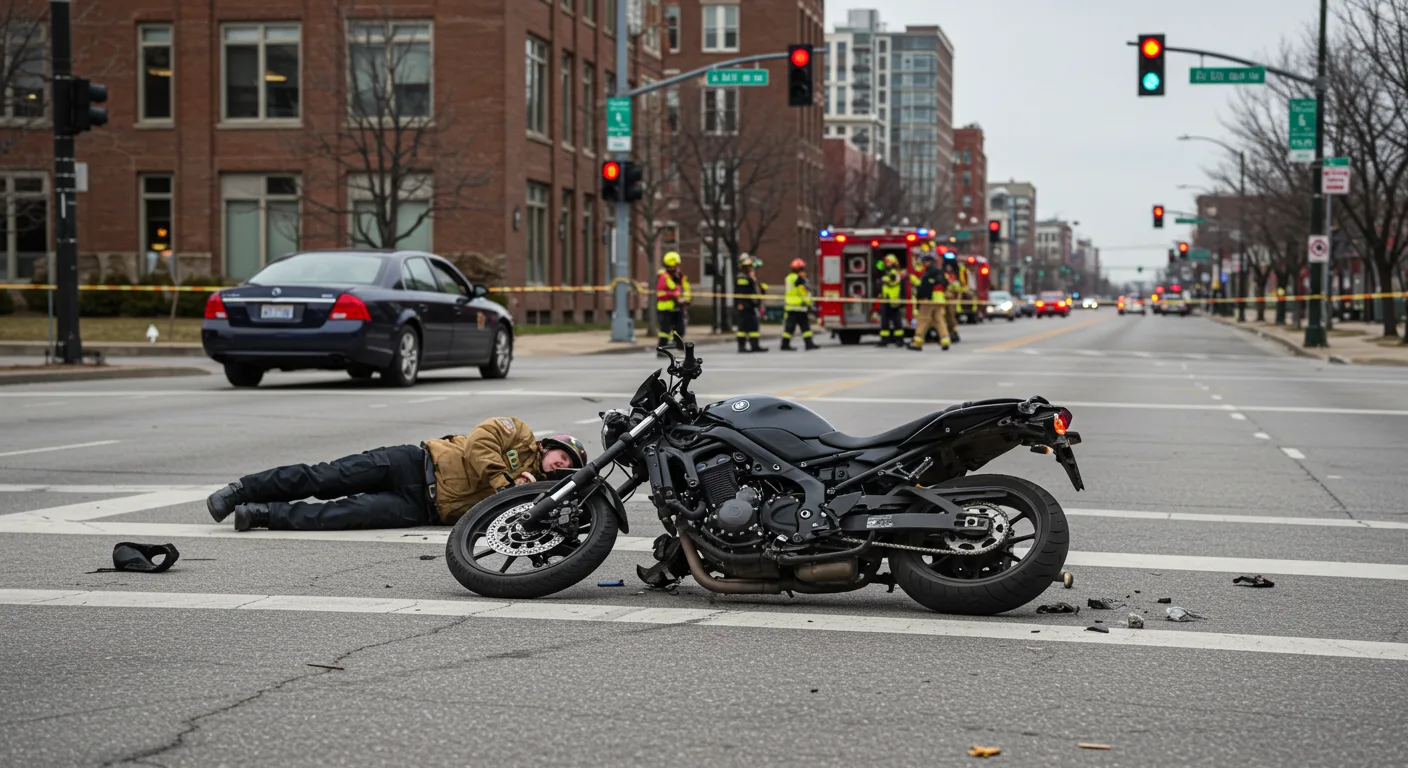
You’re riding through a Chicago intersection when a car cuts across traffic to make a left turn. You don’t have time to brake. The impact throws you from your bike, and within seconds you’re lying on the pavement with injuries that’ll keep you off work for weeks or months. Now comes the question every rider asks: Who Is at Fault in a Left-Turn Motorcycle Accident in Illinois?
The short answer is that the driver who turned left is usually at fault, but not automatically. Illinois law requires every motorist to yield the right-of-way before turning across oncoming traffic. When a left-turning driver misjudges the speed or distance of an approaching motorcycle and causes a crash, that driver violated the duty to yield. The rider had the right-of-way. Understanding who is at fault in a left-turn motorcycle accident in Illinois isn’t whether the crash happened, it’s whether the other driver breached their legal duty and whether you can prove it.
This post walks you through how fault is decided in left-turn motorcycle crashes in Illinois, what evidence you need, how comparative negligence can reduce your recovery by up to 49%, and when insurance carriers try to shift blame onto the rider. We’ll also cover what to do right after the crash and when it makes sense to talk to a lawyer who knows the games adjusters play.
Why Are Left-Turn Accidents So Common for Motorcyclists?
Motorcycles are harder to see. Period. A car turning left across an intersection scans for headlights, large vehicle profiles, and motion. A motorcycle is smaller, its headlight less conspicuous, and drivers routinely misjudge how fast a bike is approaching. According to the National Highway Traffic Safety Administration, approximately 42% of fatal motorcycle crashes involving another vehicle occur when that vehicle turns left in front of the rider. The result: the driver turns, thinking they have time, and the rider has nowhere to go.
We’ve represented dozens of injured motorcyclists in Chicago and across Illinois, and the pattern is consistent. The turning driver tells police, “I didn’t see the motorcycle.” That’s an admission of negligence, not a defense. Illinois law doesn’t excuse a failure to look carefully. When you turn left, you’re required to yield to oncoming traffic, and that includes motorcycles you should have seen if you’d been paying attention. These are core principles when determining who is at fault in a left-turn motorcycle accident in Illinois.
Left-turn crashes also tend to cause serious injuries. The side of a turning car hits the rider broadside, or the rider T-bones the car’s passenger side. Either way, the motorcyclist absorbs the full force with minimal protection. Broken bones, road rash, shoulder and knee damage, and traumatic brain injuries are common. These aren’t fender-benders.
What Is the Legal Standard for Determining Fault?
Determining who is at fault in a left-turn motorcycle accident in Illinois depends on who violated Illinois traffic law and the duty of reasonable care. Under 625 ILCS 5/11-904, a driver planning to turn left must yield the right-of-way to any vehicle approaching from the opposite direction that’s close enough to constitute an immediate hazard. The motorcyclist traveling straight through the intersection has the right-of-way. If the driver turns anyway and causes a collision, that driver is at fault.
Fault in Illinois is determined by applying the facts to the elements of negligence: duty, breach, causation, and damages. The turning driver owed you a duty to yield. By turning in front of you, the driver breached that duty. The breach caused the crash. You suffered injuries and financial losses. When all four elements line up, the driver is liable.
Police reports often reflect this. If the officer cites the left-turning driver for failure to yield, that citation is strong evidence of fault. It isn’t conclusive in a civil case, but it carries weight. Insurance adjusters know it, defense lawyers know it, and juries understand it.
But remember: Illinois follows a comparative negligence rule under 735 ILCS 5/2-1116. Even if the other driver is mostly at fault, the insurance carrier will look for ways to pin some blame on you. Were you speeding? Did you have a headlight out? Were you weaving between lanes? Any percentage of fault assigned to you reduces your recovery. We’ll cover that in detail below.
Who Is at Fault in a Left-Turn Motorcycle Accident in Illinois? How Insurance Companies Try to Blame the Rider
Here’s what we see in almost every motorcycle case: the at-fault driver’s insurance company tries to shift blame onto the rider. Adjusters know motorcyclists face bias. Juries sometimes assume riders are reckless. So the carrier builds a story that you were speeding, that you appeared out of nowhere, or that you could have avoided the crash if you’d been more careful.
They’ll comb through your social media for photos of you on your bike, looking for anything that suggests aggressive riding. They’ll pull your driving record, hoping for prior tickets. They’ll order the police report and highlight any statement you made at the scene that could be twisted to sound like an admission. If you said, “I was going pretty fast,” they’ll interpret that as excessive speed, even if you were within the limit.
This is where having a lawyer who worked on the defense side matters. Before founding Eliasik Law, I spent years representing a major insurance carrier. I know exactly how these files are reviewed, what red flags adjusters look for, and which arguments get trotted out to reduce settlement value. That insider knowledge means we can anticipate the defense strategy and shut it down early with evidence that locks in the other driver’s liability.
Don’t give the adjuster ammunition. Don’t agree to a recorded statement without talking to a lawyer first. Don’t post anything about the crash or your recovery on social media. And don’t accept an early settlement offer that doesn’t cover your medical bills, lost wages, and future treatment.
What Evidence Proves Fault in a Left-Turn Motorcycle Crash?
Proving who is at fault in a left-turn motorcycle accident in Illinois requires documentation. The better your evidence, the harder it is for the insurance company to deny or lowball your claim. Here’s what you need:
- Police report. Call 911 at the scene. Make sure an officer responds and files a report. If the officer issues a citation to the other driver for failure to yield, that report becomes a cornerstone of your case.
- Witness statements. Other drivers, pedestrians, or passengers who saw the crash can confirm the sequence of events. Get names and phone numbers before you leave the scene if you’re able.
- Photos of the crash scene. Damage to both vehicles, skid marks, debris, traffic signals, sight lines, and road conditions all matter. Take photos with your phone or ask someone to do it for you.
- Medical records. Go to the ER or urgent care immediately, even if you think you’re okay. Adrenaline masks pain. Delayed treatment gives the insurance company a chance to argue your injuries weren’t caused by the crash.
- Motorcycle damage and repair estimates. The location and severity of damage to your bike can show the point of impact and corroborate your version of how the crash happened.
- Traffic camera or surveillance footage. Intersections in Chicago and surrounding suburbs often have cameras. Nearby businesses may have exterior surveillance. This footage can disappear within 30 to 90 days, so it’s important to request it right away.
We work with accident reconstruction experts when the facts are disputed. These specialists analyze vehicle damage, road evidence, and witness accounts to create a clear picture of what happened. In cases where the other driver claims you were speeding or ran a light, expert testimony can make or break your claim when establishing who is at fault in a left-turn motorcycle accident in Illinois.
How Does Comparative Negligence Affect Your Recovery?
Illinois uses a modified comparative negligence rule as of 2026. You can recover damages as long as you’re less than 50% at fault. But your award is reduced by your percentage of fault. If a jury finds you 20% responsible for the crash and awards you $100,000, you’ll receive $80,000. If you’re found 51% or more at fault, you get nothing.
Insurance adjusters use this rule as leverage. They’ll argue you were speeding, that you failed to keep a proper lookout, or that you could have swerved or braked to avoid the collision. Even a modest fault assignment can save the carrier significant money, so they push hard.
Here’s a real-world example. A rider is traveling straight through an intersection at 38 mph in a 30 mph zone. A driver turns left without yielding and causes a crash. The rider suffers a fractured femur and can’t work for three months. The insurance company argues the rider’s speed contributed to the crash. If a jury assigns 25% fault to the rider, a $200,000 verdict drops to $150,000.
We counter these arguments by showing the left-turning driver had the last clear chance to avoid the crash. Even if you were going slightly over the limit, the other driver still had a duty to wait until it was safe to turn. The fact that you were visible and approaching with the right-of-way usually outweighs minor speed issues when determining who is at fault in a left-turn motorcycle accident in Illinois.
When the Turning Driver Claims You Came Out of Nowhere
“I didn’t see the motorcycle” is the most common defense in left-turn crashes, and it’s legally meaningless. A driver who fails to see what they should have seen is negligent. Illinois law requires motorists to keep a proper lookout. The duty to yield applies to vehicles that are there, whether the turning driver noticed them or not.
Still, adjusters and defense lawyers will argue you “came out of nowhere,” implying you were going too fast or riding erratically. They’ll suggest the bike’s size made it impossible to spot in time. They’ll point to sun glare, shadows, or other cars as excuses.
None of that absolves the driver of liability. If visibility was poor, the driver should have waited longer before turning. If the sun was in their eyes, they should have slowed or stopped. If other cars blocked the view, they should have inched forward carefully. Turning left across oncoming traffic is inherently risky, and the law puts the burden on the person making that turn.
We’ve seen cases where the driver swears under oath they looked both ways and saw nothing, yet dashcam footage from another car clearly shows the motorcycle approaching. The “out of nowhere” defense crumbles when you have objective evidence. That’s why gathering video, photos, and witness accounts right after the crash is so important for establishing who is at fault in a left-turn motorcycle accident in Illinois.
What Happens When the Rider Was Lane-Splitting or Filtering?
Lane-splitting and filtering aren’t legal in Illinois. Lane-splitting is riding between lanes of moving traffic; filtering is doing the same thing when traffic is stopped. If you were lane-splitting at the time of the crash, the insurance company will argue you caused or contributed to the collision.
Does that mean the left-turning driver gets off the hook? No. But it complicates your case. A jury might assign you a significant percentage of fault, which reduces your recovery under Illinois’s comparative negligence rule. If you’re found more than half at fault, you recover nothing.
We’ve handled cases where the rider was accused of lane-splitting even though they weren’t. Adjusters look at crash diagrams and photos and make assumptions. If the bike ended up between lanes after the impact, the carrier will claim you were riding there before the crash. Clear witness testimony and scene reconstruction can disprove that story.
Bottom line: if you were following the rules of the road and the other driver turned into your path, you have a strong case when establishing who is at fault in a left-turn motorcycle accident in Illinois. If you were breaking the law, we’ll still fight to show the driver’s failure to yield was the primary cause of the crash, but your recovery will likely be reduced.
What to Do Immediately After a Left-Turn Motorcycle Crash
The minutes after a crash determine the strength of your case. Here’s what to do:
Call 911. Report the crash and request police and an ambulance. Even if you think you’re fine, get checked out. Shock and adrenaline hide injuries.
Don’t apologize or admit fault. Be polite, but don’t say “I’m sorry” or “I didn’t see you either.” Anything you say can be used against you later.
Exchange information with the other driver. Get their name, phone number, insurance carrier, policy number, and license plate. Take a photo of their driver’s license and insurance card if possible.
Document the scene. Photograph vehicle damage, the intersection, traffic signals, skid marks, debris, and anything else relevant. If your phone was damaged, ask a witness to take photos and send them to you.
Get witness contact information. If anyone saw the crash, get their name and number. Don’t rely on the police to do this. Officers are busy and may not collect every witness.
Seek medical attention. Go to the ER or an urgent care clinic. Tell the doctor about every area of pain, even minor aches. Injuries you don’t report immediately can be used by the insurance company to argue they weren’t caused by the crash.
Don’t talk to the other driver’s insurance company. They’ll call within hours, sounding friendly and concerned. They’re not on your side. They want a recorded statement they can use to minimize or deny your claim. Politely decline and call a lawyer.
Don’t post on social media. Adjusters and defense lawyers will review your Facebook, Instagram, and other accounts looking for photos or comments that contradict your injury claims. Stay offline until your case is resolved.
How Eliasik Law Handles Left-Turn Motorcycle Accident Cases
We represent injured motorcyclists across Illinois, and left-turn crashes are one of the most common case types we see. Here’s how we approach them:
We investigate immediately. That means sending a demand letter to preserve surveillance footage, interviewing witnesses while memories are fresh, photographing the scene, and reviewing the police report for errors or omissions. Evidence disappears fast. We move faster.
We reconstruct the crash when the facts are disputed. If the other driver claims you were speeding or appeared suddenly, we bring in accident reconstruction experts who analyze skid marks, vehicle damage, sight lines, and speed calculations. Their reports carry weight with adjusters and juries when proving who is at fault in a left-turn motorcycle accident in Illinois.
We handle the insurance company so you can focus on recovery. You won’t talk to the at-fault driver’s adjuster. We will. We know the tactics they use, the questions they ask, and the traps they set. We’ve been on their side of the table. Now we use that knowledge to protect you.
We don’t settle cheap. A fractured leg, broken wrist, or traumatic brain injury can cost you months of lost wages, substantial medical bills, and permanent limitations. The carrier’s first offer won’t cover that. We push for full compensation, and if they won’t offer it, we’re ready to file suit and go to trial.
We’ve secured settlements exceeding $500,000 in serious injury cases, and we’ve won verdicts and settlements for riders who were told their cases weren’t worth much. Every case is different, but the principle is the same: you’re owed what the law says you’re owed, not what the insurance company wants to pay.
Talk to Eliasik Law About Your Motorcycle Accident Case
If you’ve been hurt in a left-turn crash, you’re facing medical bills, lost wages, and an insurance company that’s already looking for ways to deny or reduce your claim. You didn’t cause this. The driver who turned into your path did. You deserve to be made whole.
We offer free consultations, and we work on contingency. That means no upfront fees and no attorney fees unless we win your case. We’ve represented injured riders across Chicago and Illinois for years, and we know how to beat the tactics insurance carriers use to avoid paying what they owe.
If you’re asking who is at fault in a left-turn motorcycle accident in Illinois, the answer starts with a conversation. Contact Eliasik Law today to discuss your case and learn how we can help you recover the compensation you deserve under 2026 Illinois law.
FAQs
Who Is at Fault in a Left-Turn Motorcycle Accident in Illinois if the Light Was Yellow?
The left-turning driver is still usually at fault. A yellow light means the signal is about to turn red; it doesn’t give a driver the right to turn across oncoming traffic without yielding. If you entered the intersection on yellow or green and the driver turned into your path, the driver violated the duty to yield. Even if you entered on yellow, the turning driver must wait until oncoming traffic clears. This is a critical factor when determining who is at fault in a left-turn motorcycle accident in Illinois.
Who Is at Fault in a Left-Turn Motorcycle Accident in Illinois When Both Vehicles Had a Green Light?
When both drivers have a green light, the motorcyclist going straight has the right-of-way. The driver turning left must yield to oncoming traffic, even with a green light. Illinois law is clear: a green light gives you permission to enter the intersection, but it doesn’t give you permission to turn in front of oncoming vehicles. If the turning driver causes a crash, that driver is at fault. This is one of the most straightforward scenarios when asking who is at fault in a left-turn motorcycle accident in Illinois.
Can I still recover if I was partially at fault?
Yes, as long as you’re less than 50% at fault under Illinois law as of 2026. Illinois follows modified comparative negligence. Your damages are reduced by your percentage of fault. If you’re found 30% responsible and awarded $150,000, you receive $105,000. If you’re more than half at fault, you recover nothing. This is why it’s critical to fight the insurance company’s attempts to shift blame onto you when establishing who is at fault in a left-turn motorcycle accident in Illinois.
How long do I have to file a claim after a motorcycle crash in Illinois?
You generally have two years from the date of the crash to file a personal injury lawsuit under Illinois law. That’s the statute of limitations. If you wait longer than two years, you lose the right to sue. But don’t wait. Evidence disappears, witnesses forget details, and insurance companies use delay as a tactic. Start the claims process as soon as you’re able, especially when determining who is at fault in a left-turn motorcycle accident in Illinois requires timely investigation.
What if the driver who hit me didn’t have insurance?
If the at-fault driver is uninsured, you can file a claim under your own uninsured motorist (UM) coverage if you have it. UM coverage is designed to step in when the other driver can’t pay. Your own insurance carrier becomes the source of recovery. We handle these claims the same way we handle third-party claims, and we’re just as aggressive with your carrier if they try to deny or undervalue your injuries.
Will I have to go to court?
Most motorcycle accident cases settle before trial. Insurance companies know the cost and uncertainty of going to court, and they’ll usually negotiate a fair settlement if you have strong evidence and an attorney who’s willing to file suit. That said, we prepare every case as if it’s going to trial, because that’s what forces the carrier to take your claim seriously. If they won’t offer what you’re owed, we’re ready to present your case to a jury, especially when proving who is at fault in a left-turn motorcycle accident in Illinois requires litigation.
How much is my left-turn motorcycle accident case worth?
Every case is different. The value depends on the severity of your injuries, the amount of medical treatment you need, how long you’re out of work, whether you have permanent limitations, and how clear the other driver’s fault is. We’ve handled cases worth $50,000 to over $500,000 depending on these factors. The only way to know what your case is worth is to have it evaluated by a lawyer who understands motorcycle crash litigation and the tactics insurance companies use to lowball injured riders.
Who Is at Fault in a Left-Turn Motorcycle Accident in Illinois if I wasn’t wearing a helmet?
Helmet use isn’t required for riders over 18 in Illinois, and failing to wear one doesn’t make you at fault for the crash. But the insurance company will argue that your injuries would have been less severe if you’d worn a helmet, and they’ll try to reduce your damages accordingly. Whether that argument succeeds depends on the nature of your injuries. If you suffered a traumatic brain injury, lack of a helmet can become a comparative negligence issue. If your injuries were to your legs or torso, helmet use is irrelevant when determining who is at fault in a left-turn motorcycle accident in Illinois.
Disclaimer: This article is provided by Eliasik Law for general informational purposes only and does not constitute legal advice. Reading this content does not create an attorney-client relationship. Laws, fees, regulations, and court decisions referenced may change. For advice on your specific situation, please contact Eliasik Law directly to schedule a consultation.