
Table of Contents
You settled your injury case, but the settlement check may not go straight into your pocket. Before the money is distributed, hospitals, doctors, health insurers, Medicare, Medicaid, or a workers’ compensation carrier may claim repayment for accident-related medical bills.
That is why understanding how medical liens affect your personal injury settlement in Illinois matters before you sign a release. A lien can reduce your net recovery, delay payment, and create legal problems if it is ignored. The good news is that many liens can be reviewed, challenged, reduced, or organized before settlement funds are distributed.
This guide explains what medical liens are, which liens commonly appear in Illinois injury cases, how lien caps and repayment rules may affect your settlement, and what steps can help protect more of your recovery.
Key Takeaways
Medical liens can reduce the amount an injured person actually receives from an Illinois personal injury settlement. Common liens include hospital and provider liens, private health insurance subrogation claims, Medicare or Medicaid reimbursement claims, workers’ compensation liens, and treatment liens based on letters of protection. Illinois law can limit certain health care liens, but Medicare, Medicaid, ERISA plans, and workers’ compensation liens may follow different rules. Before accepting a settlement, injured people should identify every lien, request itemized balances, challenge unrelated charges, and negotiate reductions where possible.
What Is a Medical Lien in an Illinois Personal Injury Case?
A medical lien is a legal claim against your settlement, judgment, or verdict. It usually means a health care provider, insurer, government program, or workers’ compensation carrier is asking to be repaid from the money you recover from the at-fault party.
For example, if you are injured in a Chicago car accident and your health insurance pays $18,000 in accident-related treatment, your insurer may later seek reimbursement from your settlement. If a hospital treats you and the bill is unpaid, the hospital or provider may claim a lien. If Medicare paid conditional benefits, Medicare may also seek repayment once the case resolves.
A lien is not the same as a regular bill sitting in the mail. It can affect how settlement funds are distributed, who gets paid first, and how much money you take home after attorney fees, costs, and medical repayment claims are handled.
Why Medical Liens Can Change the Real Value of a Settlement
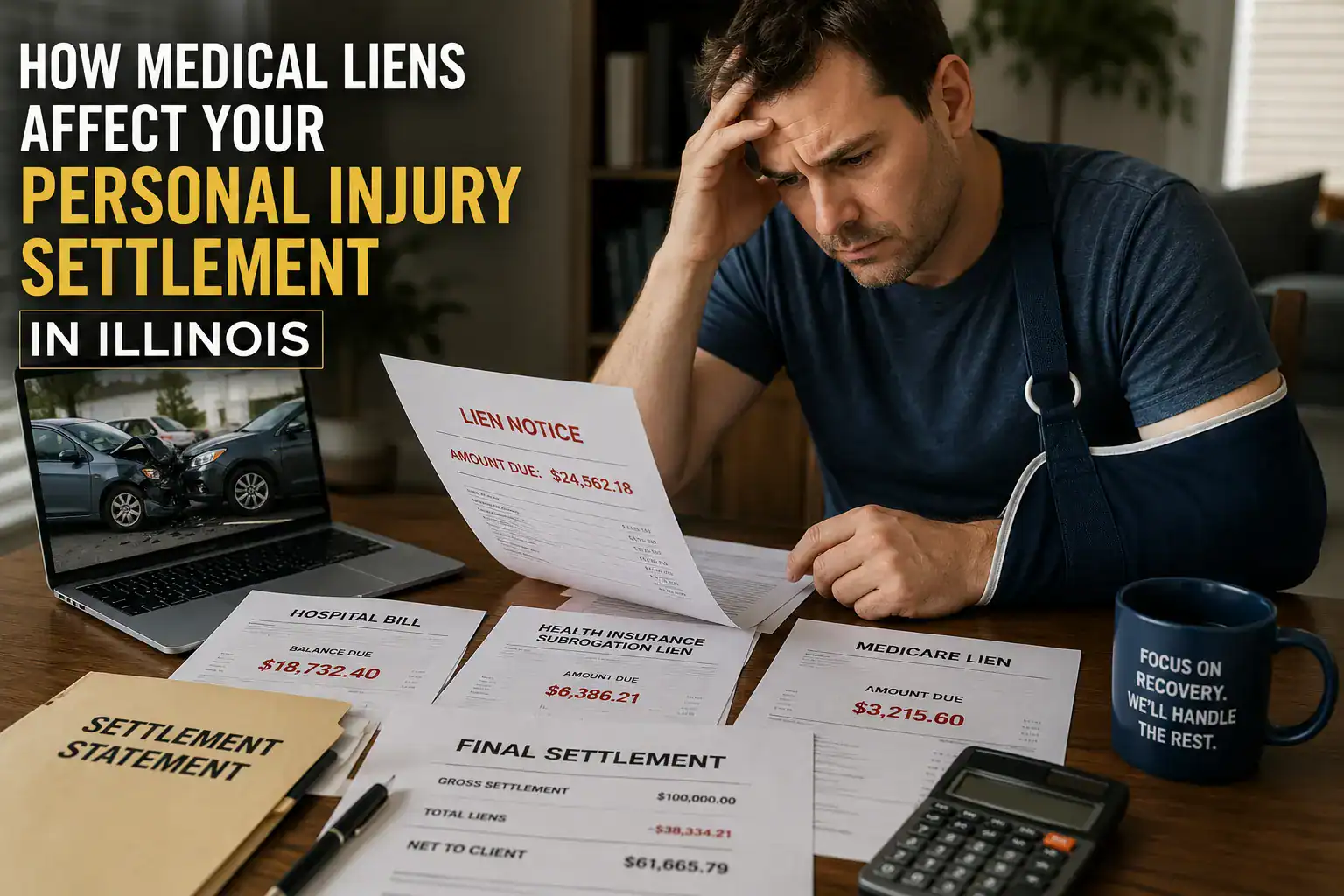
A settlement number can look strong until liens are deducted. The gross settlement is the total amount paid by the insurance company. The net recovery is what the injured person receives after attorney fees, case costs, and valid liens are resolved.
Example: imagine a $100,000 settlement with a one-third attorney fee, $2,500 in case costs, and $24,000 in medical liens. Before lien reductions, the estimated net recovery may be about $40,167. If the lien is negotiated down to $14,000, the injured person may keep about $50,167 instead. A $10,000 lien reduction can become $10,000 more in the client’s pocket.
That is why lien work should happen before the settlement is finalized, not after the check arrives. A settlement should be evaluated by looking at both the gross amount and the expected net recovery.
Common Types of Medical Liens in Illinois Injury Settlements
Hospital and Health Care Provider Liens
Hospitals, doctors, and other health care providers may assert liens for accident-related care. The key Illinois statute to understand is the Illinois Health Care Services Lien Act, which can limit how much certain health care liens take from a settlement and can require lienholders to share the available lien amount proportionally.
One of the most important numbers for Illinois injury clients is 40%. In many Illinois personal injury settlements, combined liens under the Health Care Services Lien Act cannot exceed 40% of the recovery. That does not automatically erase the bill, but it can limit what certain lienholders may take from the settlement fund.
Provider liens should be checked carefully. The treatment must relate to the accident, the amount should be supported by itemized billing, and the lien should follow Illinois notice requirements. If a bill includes unrelated treatment, duplicate charges, or inflated balances, it should be challenged before settlement funds are distributed.
Private Health Insurance Subrogation Claims
Private health insurance companies may assert subrogation or reimbursement rights when they paid accident-related medical bills. These rights usually come from the language of the insurance policy or employee benefit plan.
The rules can change depending on the type of plan. Employer-sponsored plans governed by ERISA may have stronger federal reimbursement rights. Individual health plans, union plans, government employee plans, and other non-ERISA policies may allow more room for negotiation under state law or plan language.
The insurance company should be asked for the plan language, itemized payments, and proof that each charge is related to the injury claim. A lien should not be paid blindly just because a recovery vendor sends a demand letter.
Medicare and Medicaid Liens
Medicare and Medicaid liens require special care. If Medicare paid for accident-related treatment, those payments are usually considered conditional payments because another party may be responsible. Medicare must be notified and repaid from the settlement when applicable.
Medicare recovery often involves a conditional payment letter, a payment summary, a chance to dispute unrelated charges, and a final demand amount after settlement. If the amount includes treatment unrelated to the accident, it should be disputed with supporting records before final payment.
Illinois Medicaid reimbursement can also affect settlement distribution. Medicaid recovery rules can be technical, especially when the settlement does not fully compensate the injured person for every category of damages. These liens should be reviewed before any settlement funds are released.
Workers’ Compensation Liens
If you were hurt while working and also have a third-party personal injury claim, a workers’ compensation carrier may claim reimbursement for benefits it paid. This can happen in work-related car accidents, delivery driver crashes, construction injuries, and other job-related incidents caused by someone other than the employer.
Workers’ compensation liens can include medical benefits and wage-loss benefits. In Illinois, attorney fees and litigation costs can often reduce the amount the workers’ compensation carrier receives from a third-party recovery. That reduction can make a major difference in the client’s final net settlement.
Letters of Protection and Treatment-on-Lien Agreements
Some providers treat injured people under a letter of protection or treatment-on-lien agreement. This means the provider agrees to wait for payment until the case resolves, usually in exchange for being paid from the settlement.
These agreements can help someone get care when they do not have insurance, but they can also lead to large bills at the end of the case. The provider may bill at full charges rather than an insurance-discounted rate. Before settlement, those balances should be reviewed and negotiated where possible.
How Illinois Lien Limits Can Protect Part of Your Settlement
Illinois law can limit certain health care liens so that providers do not consume the entire settlement. In many cases covered by the Health Care Services Lien Act, qualifying health care liens are capped at a percentage of the recovery and shared among eligible lienholders.
That protection matters most in smaller settlements or high-medical-bill cases. For example, if the settlement is limited by insurance coverage and medical bills are larger than the available policy limits, lien caps and negotiations may be the difference between the injured person receiving meaningful compensation and receiving almost nothing.
Not every repayment claim is controlled by the same Illinois lien cap. Medicare, Medicaid, ERISA reimbursement claims, workers’ compensation liens, and contractual provider liens may follow different rules. A settlement review should separate each lien by type before deciding what must be paid.
Who Gets Paid First From a Personal Injury Settlement?
There is no single simple order that fits every Illinois injury case, but settlement funds are usually distributed only after attorney fees, case costs, and valid repayment claims are reviewed. Medicare and Medicaid claims require special attention because government reimbursement rules can delay distribution if they are not handled correctly.
A practical settlement review usually answers five questions: What is the gross settlement? What are the attorney fees and case costs? Which liens are valid? Which liens can be reduced? What will the injured person actually receive after everything is paid?
A settlement should not be approved based only on the headline number. The real question is the net recovery after liens are handled.
Can Medical Liens Be Negotiated in Illinois?
Yes, many medical liens can be negotiated. Hospital liens, provider balances, letters of protection, and some private health insurance claims may be reduced when the settlement is limited, liability is disputed, the lien includes unrelated treatment, or attorney fees and costs helped create the recovery.
Medicare and Medicaid liens are more formal, but they can still be reviewed for unrelated charges, duplicate charges, or reductions tied to procurement costs where applicable. Workers’ compensation liens may also be reduced by attorney fees and costs in a third-party recovery.
Lien negotiation is not just paperwork. It can directly increase the client’s take-home recovery. A reduction of even $5,000 or $15,000 can matter when someone is trying to catch up on rent, car payments, missed work, and out-of-pocket medical expenses after an injury.
What Happens If You Ignore a Medical Lien?
Ignoring a lien can create serious problems after the injury case closes. A provider or insurer may continue collection efforts, demand repayment, or file a claim against settlement funds. Government liens can create additional risks because Medicare and Medicaid repayment rules are strict.
The safer approach is to identify liens early, request written balances, dispute unrelated charges, and resolve valid liens before settlement money is fully distributed. This protects the injured person from surprise bills or repayment demands months after settlement.
If you receive a lien notice, do not throw it away. Keep the envelope, save the letter, and send it to your attorney. Different letters may list different balances, and the paper trail helps identify errors.
Common Mistakes That Can Reduce Your Net Settlement
The first mistake is focusing only on the gross settlement. A $150,000 settlement with large liens may leave less money than expected. The second mistake is accepting a settlement before lien amounts are known. The third mistake is assuming every lien demand is accurate.
Other common mistakes include ignoring Medicare notices, failing to review itemized bills, paying unrelated treatment charges, letting providers bill at full charges without negotiation, or distributing settlement funds before final lien amounts are confirmed.
Good lien handling should happen throughout the case, not at the last minute. Early lien tracking helps prevent settlement delays and gives the lawyer more leverage to negotiate reductions.
What Should You Do If You Receive a Lien Notice?
If you receive a lien notice after an Illinois accident, save it and send it to your lawyer immediately. Do not call the lienholder and negotiate alone before you understand whether the lien is valid, whether the amount is accident-related, and whether it can be reduced.
Ask for an itemized statement. Compare the dates of treatment with the accident timeline. Check whether the charges were already paid by insurance. Review whether the lien includes unrelated care. Then calculate how the lien affects the expected net recovery.
If you are not represented yet, a lien notice is a good reason to speak with an Illinois personal injury lawyer before settlement. Once funds are distributed incorrectly, fixing lien problems becomes harder.
Get Help Protecting Your Illinois Injury Settlement
If medical liens are threatening to reduce what you take home after an injury settlement, contact The Law Offices of John S. Eliasik for a free consultation. The firm can review lien notices, settlement math, repayment claims, and medical bill issues before you sign a release or accept a final settlement.
FAQs
How do medical liens affect your personal injury settlement in Illinois?
Medical liens can reduce the amount you receive after settlement. Before funds are distributed, valid liens may need to be paid or resolved. The final take-home amount depends on the settlement size, attorney fees, case costs, and lien reductions.
Can a hospital put a lien on my Illinois personal injury settlement?
Yes. Hospitals and other health care providers may assert liens for accident-related treatment. The lien should be reviewed for proper notice, accident-related charges, and possible limits under Illinois law.
Are medical liens negotiable in Illinois?
Many are. Hospital liens, provider liens, letters of protection, and some private insurance claims may be negotiated. Medicare, Medicaid, ERISA, and workers’ compensation liens may involve stricter rules but should still be reviewed for errors or reductions.
How much of my settlement can medical liens take?
It depends on the lien type. Certain Illinois health care liens may be limited by statute, while Medicare, Medicaid, ERISA, and workers’ compensation claims may follow different rules. A lawyer can calculate the likely net recovery before settlement.
Do I have to pay Medicare back from a personal injury settlement?
If Medicare paid accident-related medical bills, Medicare may seek reimbursement from the settlement. The conditional payment amount should be reviewed to remove unrelated charges before final repayment.
What is the difference between a lien and subrogation?
A lien is a claim against settlement funds. Subrogation is a repayment right, often used by health insurers, allowing them to recover medical payments from a third-party settlement. Both can affect your net recovery.
Can my health insurance take money from my injury settlement?
Yes, some health insurance plans have reimbursement or subrogation rights. The answer depends on the plan language, whether the plan is governed by ERISA, and whether the charges are related to the accident.
What happens if I ignore a medical lien?
Ignoring a lien can lead to collection efforts, repayment demands, delayed settlement distribution, or legal claims. Government liens can create additional problems. Valid liens should be resolved before settlement funds are fully distributed.
Can a lawyer reduce medical liens after an Illinois accident?
Yes. Personal injury lawyers often negotiate liens by challenging unrelated charges, applying attorney-fee reductions, arguing limited settlement funds, and requesting compromise from hospitals, insurers, or providers.
Should I settle my injury case before lien amounts are known?
Usually, no. You should know the lien picture before accepting a settlement. A settlement that looks fair on paper may leave very little after medical liens, attorney fees, and case costs are deducted.
Disclaimer: This article is provided by Eliasik Law for general informational purposes only and does not constitute legal advice. Reading this content does not create an attorney-client relationship. Laws, fees, regulations, and court decisions referenced may change. For advice on your specific situation, please contact Eliasik Law directly to schedule a consultation.